Chutian Chen (Curtis)
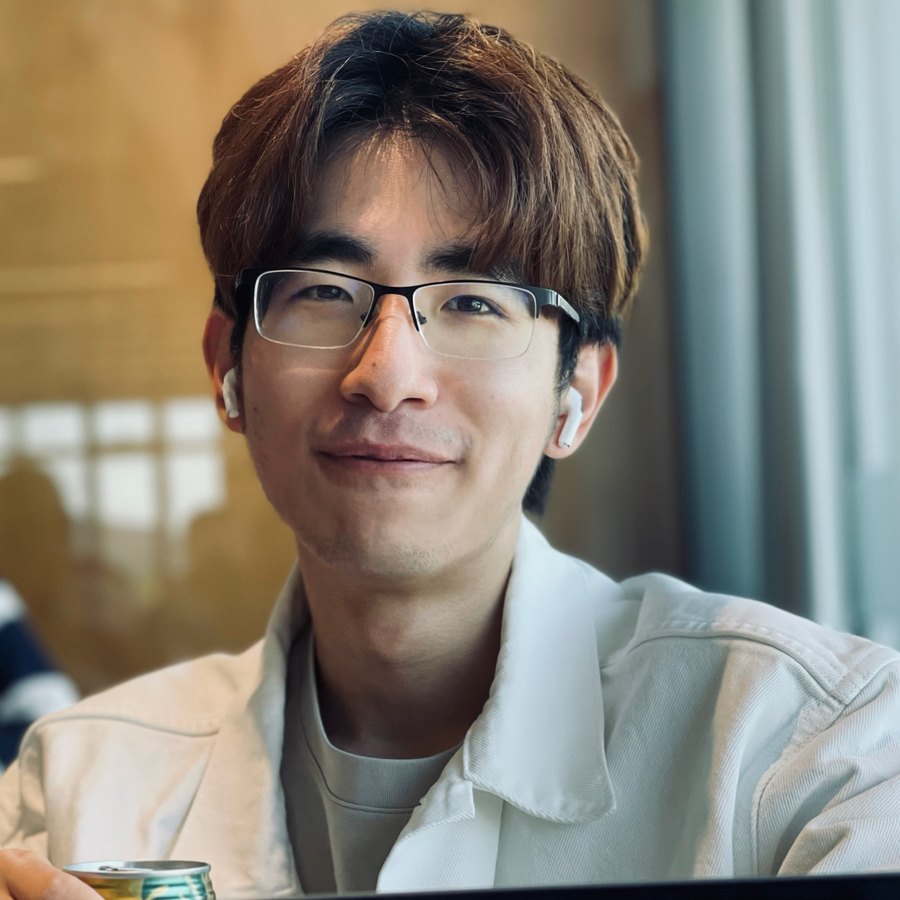
Chutian Chen (Curtis)
CEO, Quanta Edge · Hong Kong · cchencs@connect.ust.hk
A small team. Thousands of agents. A global trading firm.
This is the vision I am building toward at Quanta Edge: a few exceptional people build the system; agents research, experiment and trade across global markets.
My focus is the system that makes this scale: massively parallel research, automated experiments on real hardware, and learning that carries from one market to the next.
What I am building
Quanta Edge is a next-generation proprietary trading firm. We are building one shared system for strategy discovery, software and hardware design, and live trading. Our conviction is that an entire firm built around agents can improve faster with every experiment, and expand across markets with a small team.

Strategies, markets and reusable infrastructure
Software, simulation and real FPGA boards
Validated strategies and market expansion
↻ Shared learning improves the next round
- Parallel discovery. Agents explore different strategies and markets at the same time, reusing data tools, research methods and execution infrastructure.
- Real hardware experiments. Automation extends beyond software and simulation. Agents jointly optimise strategies and FPGA designs through deployment and testing on real boards.
- Shared learning. Research results, hardware measurements and live trading feedback improve the system. Better foundation models can then accelerate the same workflows across markets.
Latest research
EvoQuantLab: Training-Free Dual-Loop Evolution for Auditable Quantitative Research (arXiv, 2026).
Our research explores how an automated quant system can improve its own research process. An inner loop uses genetic programming to search for factors; an outer loop diagnoses results and evolves the search methods.
Background
Before QE, I founded and led strategy research at Futuristic Group (2025–2026), building systematic and prediction-market trading strategies. Earlier, I worked on reinforcement learning for FX trading at Graphen, out-of-distribution robustness at Megvii, and recommendation algorithms at Alibaba.
I am a Ph.D. candidate at HKUST, researching AI for finance. I hold an M.S. in Computer Science from Columbia, a B.Eng. in Engineering Physics from Tsinghua, and a B.S. in Economics from Peking University as a double major.
Build with us
AI research
Agent infrastructure
Trading
I am looking for researchers and engineers who want to make agents more capable through large-scale experimentation, and exceptional traders who can help turn that capability into a global trading business.